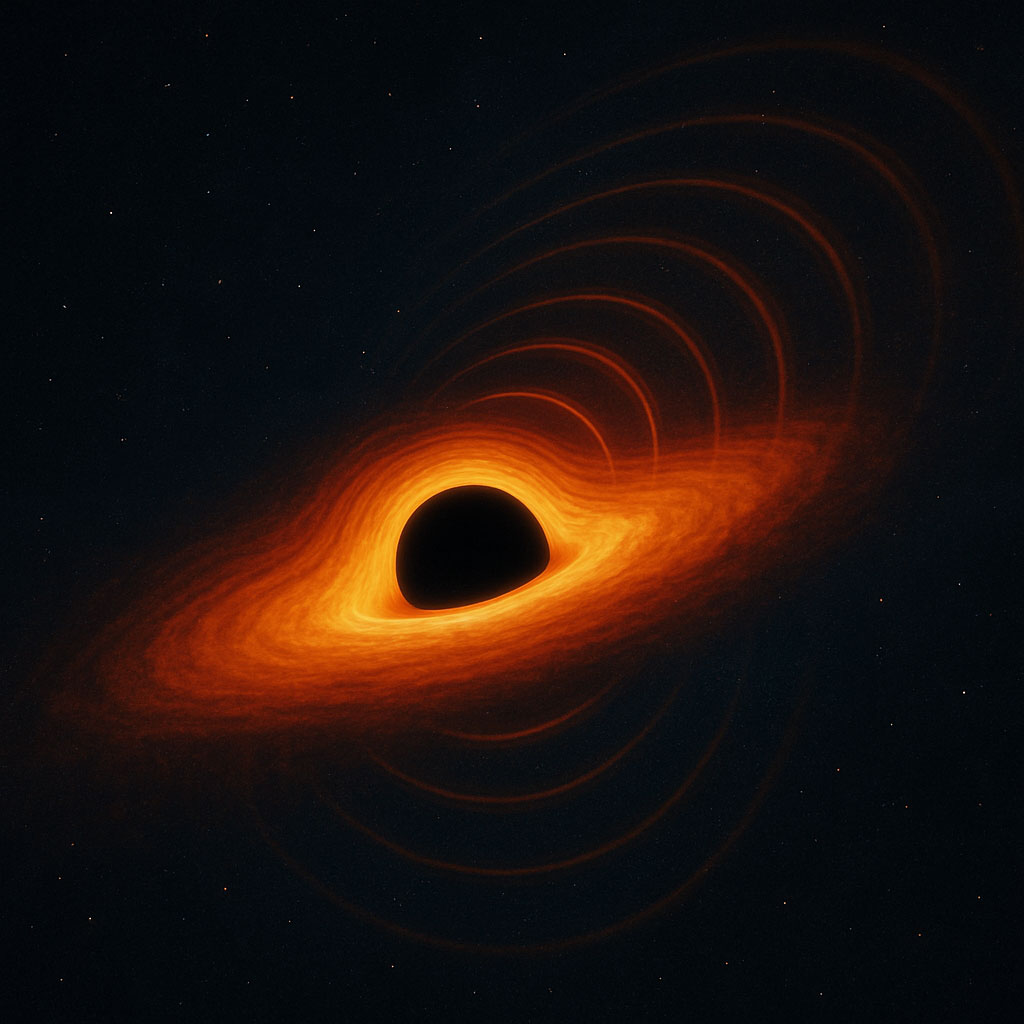
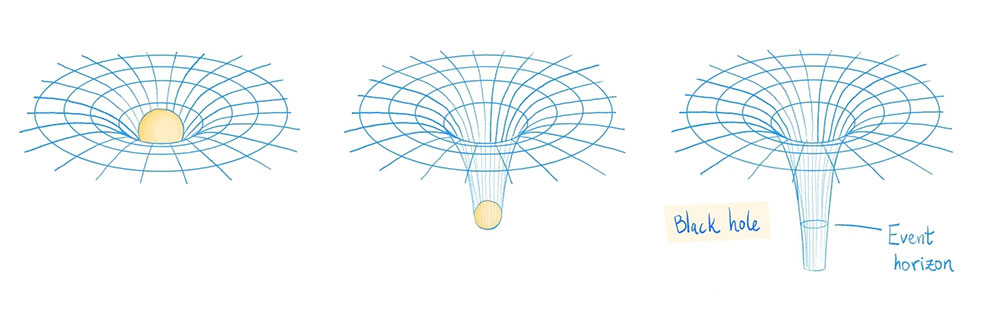
Not long ago, black holes were not taken seriously as real objects in our universe. They were regarded as curious solutions to Einstein’s equations rather than actual astrophysical entities, even by Einstein himself. But theoretical and observational breakthroughs—for which the 2020 Nobel Prize in Physics was awarded—have firmly established black holes as central players in the cosmos.
But while real-world observations rightly make headlines, an equally important frontier lies in understanding the theoretical foundations of black holes. As a researcher working on quantum effects in black hole spacetimes, I see black holes as playgrounds where gravity and quantum physics meet. In that sense, black holes offer a rare opportunity for exploring how these two elementary theories of nature interact.
The coming decades will not only extend our observational reach, but will also reshape our understanding of the physical world itself.
While new observations open windows into black holes, black holes, in turn, open windows into the most fundamental laws of nature.
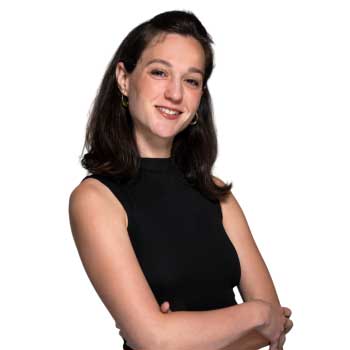
Noa received a Fulbright Postdoctoral Fellowship to conduct research in gravitational physics.
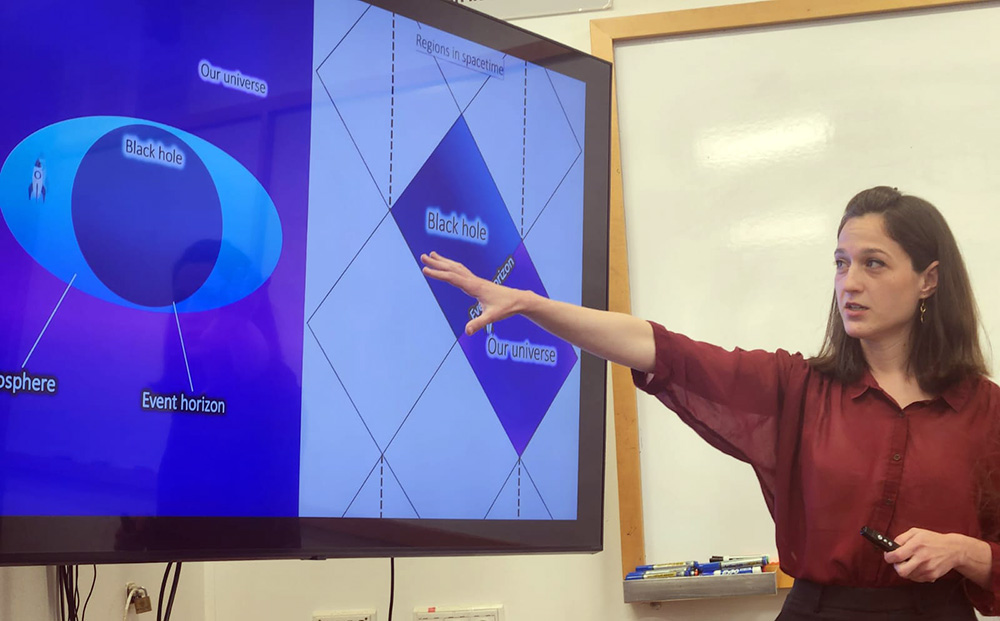
Noa graduated cum laude with a BSc in physics-mathematics from the Technion- Israel Institute of Technology, where she then pursued her PhD, titled “Semiclassical effects in black hole interiors”, under Professor Amos Ori. Her research focused on the interior of a black hole, which is the region concealed beyond the event horizon – the famous “point of no return” defining a black hole.
Classical general relativity predicts that rotating black holes contain a traversable passage through an inner horizon, potentially leading to another external universe. But does this prediction still hold when considering the quantum nature of matter, or even of the vacuum? Motivated by this long-standing question, Noa performed pioneering computations that demonstrate, firmer than ever, that vacuum quantum effects induce a curvature singularity at the inner horizon. Her findings set the stage for further investigation during her fellowship.
Alongside her research, Noa is dedicated to science communication, engaging in outreach activities for various audiences.