When I first began my journey in biology, I noticed how often people asked, “How do things go wrong? How do diseases exist in the world?” But as I learned more about the incredible complexity of biological systems, I found myself stuck on the question: “How is it possible that anything in biology ever goes right?” The human body is a complex system involving millions of processes unfolding in perfect coordination. Understanding these mechanisms is the key to both sides of the mystery, ultimately shaping how we approach the study of pathology itself.
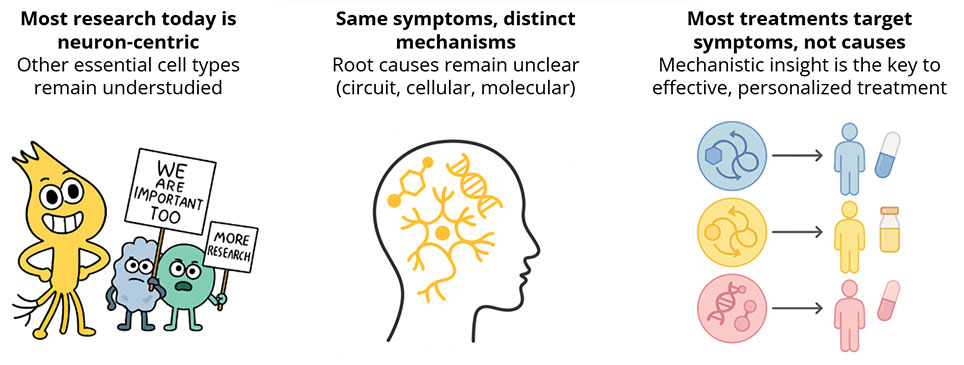
A central challenge in biomedicine is our limited understanding of the precise mechanisms that drive disease. Without this foundation, medicine often treats symptoms rather than causes. This is particularly striking in neuropathology, where a diagnosis is typically made only after extensive cellular damage has already occurred, thus exacerbating the difficulty of pinpointing the original source of the disease.
During my doctoral research in Professor Boaz Barak’s lab, I sought to bridge this gap by uncovering the biological mechanisms underlying neurodevelopmental disorders. Integrating molecular biology and bioengineering, I investigated how disruptions in cellular communication shape brain function. My study of a genetic form of autism (Fischer et al., “Shank3 mutation impairs glutamate signaling and myelination in ASD mouse model and human iPSC-derived OPCs.” Science Advances 10, no. 21 (2024)) offered a new perspective: focusing not only on neurons but also on the brain’s support cells, which are vital for proper communication and repair. Studying these underexplored cells deepens our understanding of both pathology and healthy brain function, reflecting a shift toward mechanism-driven, cross-disciplinary science.
Looking ahead, I aim to extend this framework by developing bioengineered systems that isolate specific factors that shape how cells respond to signals and thus determine their fate. It is disruptions in these processes that lead to the cellular damage underlying many neurological diseases. These systems may help identify mechanism-based therapeutic biological targets.
The rapid evolution of technologies over the coming decade will allow us to redefine how we treat disease. By advancing our mechanistic understanding of neuropathology, we can move from descriptive biology to predictive and personalized medicine – transforming how we study disease and preserve brain health.
Bio
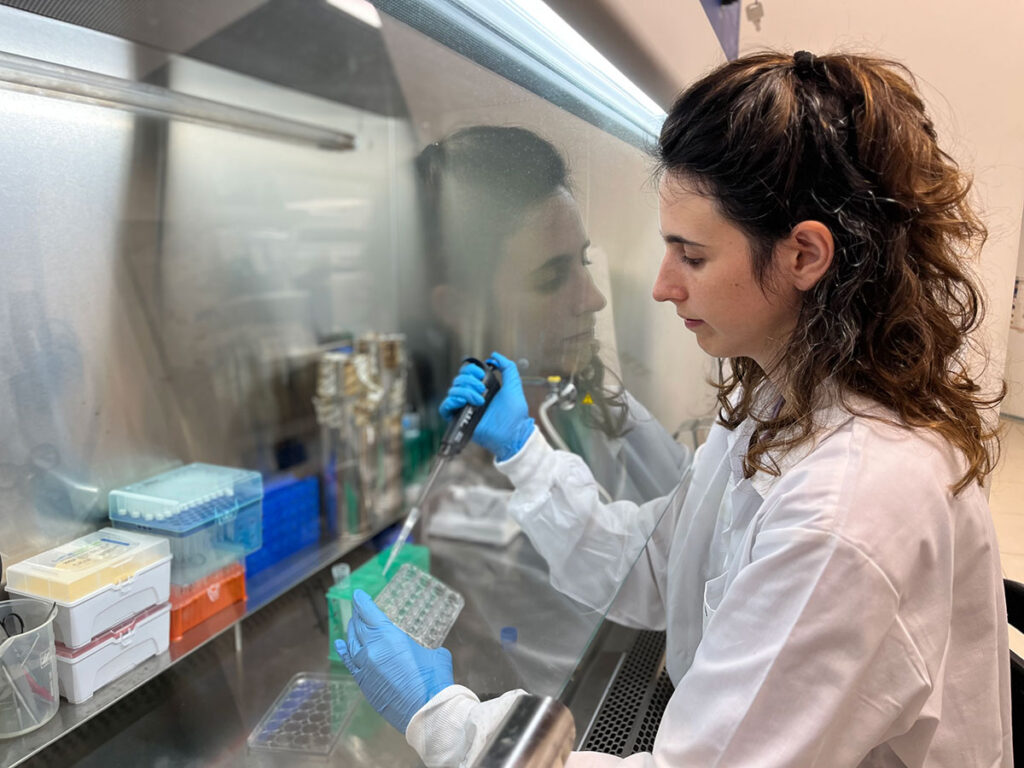
Dr. Inbar Fischer was awarded a Fulbright postdoctoral fellowship to pursue her research project titled “Bioengineered System for Disease Mechanisms and Personalized Medicine”. In her research, Inbar will develop a microfluidic organ-on-a-chip platform that integrates healthy and diseased human 3D organ models within a single interconnected system. This platform will enable the identification of the tissue of origin and underlying mechanisms of complex diseases by modeling early disease progression and cross-tissue interactions. As a proof of concept, she will focus on amyotrophic lateral sclerosis (ALS), aiming to pinpoint the disease’s origin and identify effective therapeutic strategies.
During her PhD at Tel Aviv University, under the supervision of Professor Boaz Barak, Inbar investigated the biological mechanisms underlying neurodevelopmental disorders, combining molecular neuroscience with bioengineering approaches. Her work bridges basic research and translational applications, with a focus on developing innovative tools for studying and treating brain disorders.