


Jeffrey Lesser is Samuel Candler Dobbs Professor of History at Emory University. He is the author of multiple prize-winning books in English, Portuguese, Hebrew, and Japanese. He is the winner of multiple teaching awards and has won many national and international fellowships, including a Fulbright Distinguished Chair at Tel Aviv University in 2006.
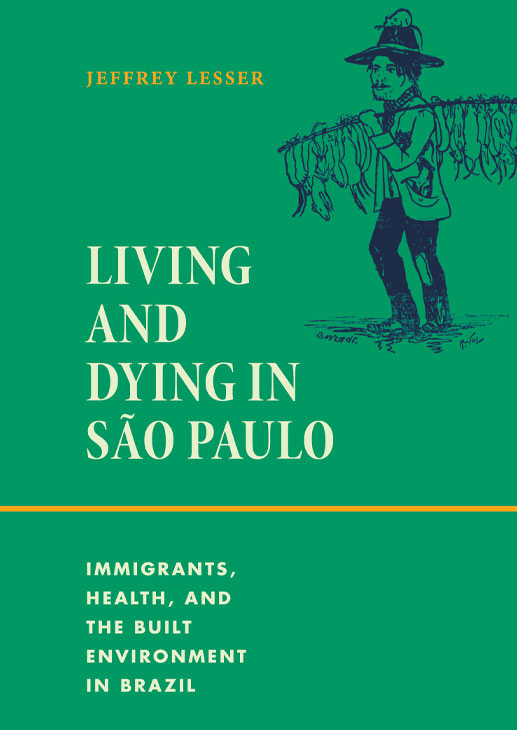
There is a saying in Brazil: “Mosquitoes are democratic: they bite the rich and the poor alike.” Why then is bad health—from violence to respiratory disease, from malaria to dengue—dispersed unevenly across different social and national groups? In Living and Dying in São Paulo, Jeffrey Lesser focuses on the Bom Retiro neighborhood to explore such questions by examining the competing visions of well-being in Brazil among racialized immigrants and policymakers and health officials. He analyzes the fraught relationship between Bom Retiro residents and the state and health care agencies that have overseen community sanitation efforts since the mid-nineteenth century, drawing out the connected systems of the built environment, public health laws and practices, and citizenship. Lesser employs the concept of “residues” to outline how continuing historical material, legislative, and social legacies structure contemporary daily life and health outcomes in the neighborhood. In so doing, Lesser creates a dialogue between the past and the present, showing how the relationship between culture and disease is both layered and interconnected.