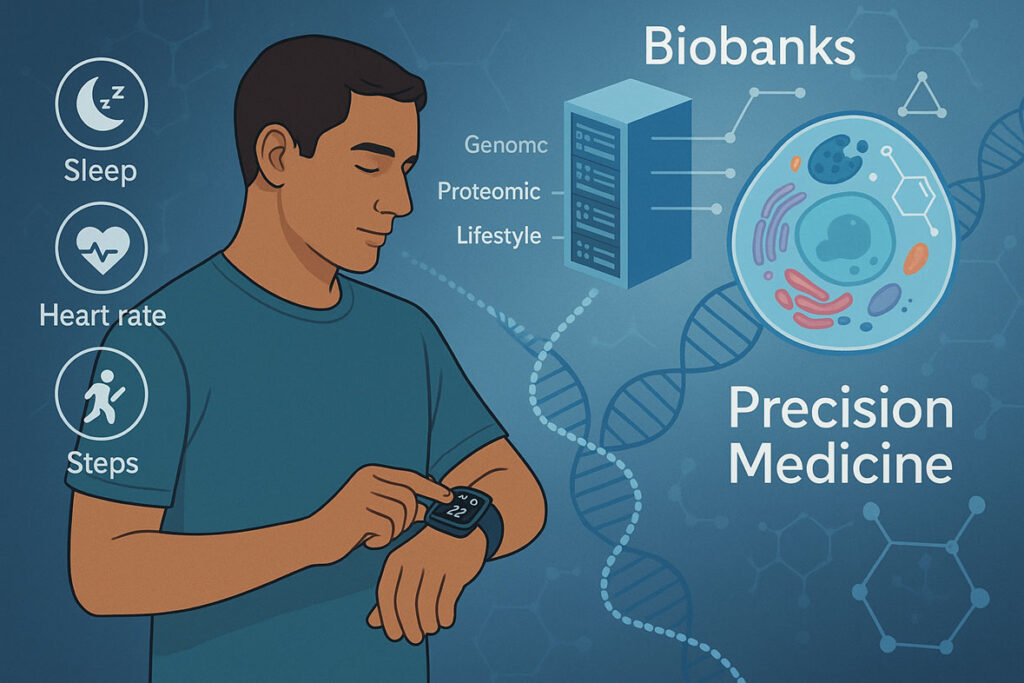
Each morning, billions of people wake up to a quiet report on their own biology. What began with simple measures of sleep, heart rate, and daily steps is rapidly evolving into something far more multifaceted. Wearable devices can now detect chemical signals from sweat, breath, and other body fluids, while vast biobanks integrate genomic, proteomic, and lifestyle information at unprecedented scale. Medicine is no longer confined to hospitals or laboratories; it now lives on our wrists, in our pockets, and—increasingly—within our very cells.
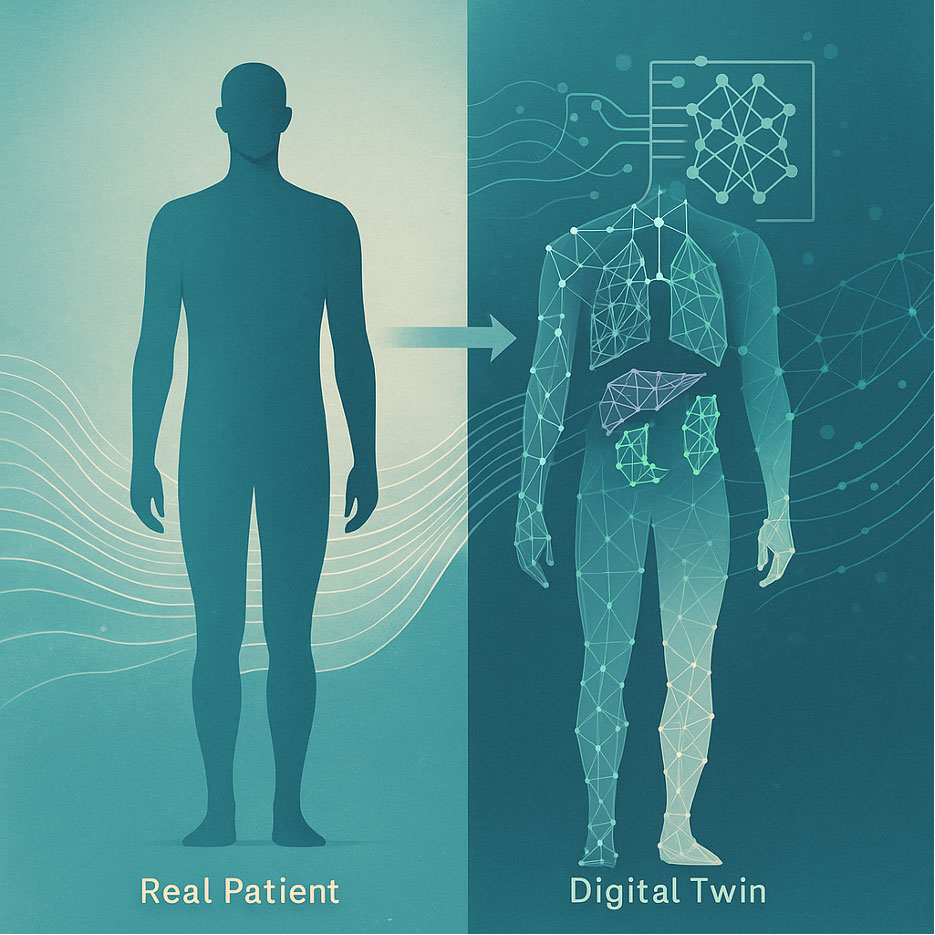
As a physician-scientist, I view this as the dawn of truly personalized health. Each of us generates an expanding digital twin composed of genetic, molecular, and behavioral data. Together, these advances mark a transition from medicine that contends with illness to medicine that anticipates it, detecting molecular whispers of disease before symptoms appear.
This precision medicine also promises to redefine how we think about disease itself. Rather than grouping patients under a single label, it allows us to understand how each person experiences illness and responds to therapy in their own unique way. Two individuals with the same diagnosis may follow different biological pathways and require different treatments.
Yet along with such great promise come profound questions. How do we protect the privacy of this most intimate data? Who decides how it is used and for whose benefit? How can we ensure that the information derived from these technologies represents the entire spectrum of humanity and not just those few with the best connections? The future of medicine depends not only on innovation but on trust, equity, and compassion.
Medicine’s next chapter will be written not only in data, but in the human stories this data helps us understand.
Bio
Dr. Ran Abuhasira was awarded a Fulbright postdoctoral fellowship to conduct research in the Division of Rheumatology, Allergy, and Immunology at Massachusetts General Hospital and in the Department of Medicine at Harvard Medical School. His research applies proteomics to identify protein signatures that reflect genetic, environmental, and metabolic pathways involved in the onset and progression of gout. By uncovering these markers, he aims to enhance risk prediction, improve disease prognosis, and advance personalized strategies for the prevention and management of gout and related metabolic-inflammatory conditions.
Ran is a senior physician in an internal medicine department and head of the Clinical Research Center at Soroka University Medical Center in Beer Sheva, Israel. He holds an MD/PhD from Ben-Gurion University of the Negev, where he graduated summa cum laude. His PhD in epidemiology, supervised by Professor Victor Novack, focused on the safety and efficacy of medical cannabis in older adults. He completed his internship at Assuta Ashdod Hospital and his residency in internal medicine at Rabin Medical Center.