


Itamar Taxel is the head of the Pottery Specializations Branch at the Israel Antiquities Authority (IAA) Archaeological Research Department. He is involved with various fieldwork and research projects on behalf of the IAA, Tel Aviv University, and the Israel Nature and Parks Authority, and he has authored and coauthored seven monographs and numerous articles and book chapters on the archaeology of Hellenistic to Late Islamic historical Palestine.
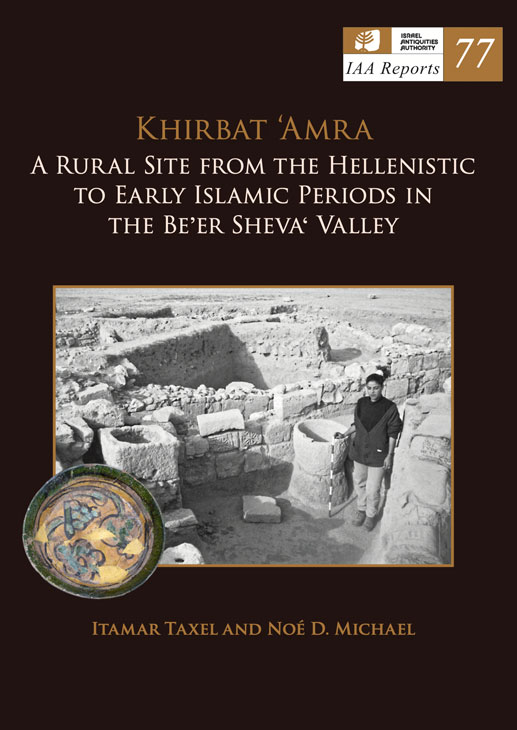
Khirbat Amra: A Rural Site from the Hellenistic to Early Islamic Periods in the Be’er Sheva Valley constitutes the final report of the large-scale salvage excavations directed by Gil Tahal on behalf of the IAA in 1993–1994 at the site of Khirbat ‘Amra, in the north-central area of the Be’er Sheva‛ Valley. The excavations were carried out prior to construction activities within the present-day Omer Industrial Park and revealed architectural remains and finds dated mainly to the Hellenistic until the Early Islamic periods, in addition to scantier remains or isolated finds from the Chalcolithic period, the Iron Age II and the Ottoman period. Khirbat ‘Amra is one of the largest multiperiod sites in the Be’er Sheva‛ Valley, specifically in the Byzantine and Early Islamic periods. Furthermore, Tahal’s excavations were the most extensive ones carried out prior to the last decade in a rural site of the classical and Islamic periods in the region. Consequently, the Khirbat ‘Amra excavations hold the potential to considerably contribute to our knowledge about the history, settlement patterns, material culture and daily life of the region’s population about the third or second century BCE and the ninth or tenth century CE.